|
After
savouring a foie gras why not enjoy a good read with as much
flavour of South West France as foie gras
The
Well
- a novel by Mike Briley
(editor of this site)
|

|
Foie
Gras
|
|
The
origins:
The
ancient Egyptians were the first to eat the tasty meat of
geese that visited the banks of the Nile during the winter
months. They notice that the livers' of these geese were
particularly delicious. The liver's flavour came from the
fat reserves that the geese stored in preparation for their
return flight in the spring. Wild geese thus initially
overfeed themselves!
|
|
|
In
BC 100 the Romans found a way of helping Nature to enrich
the flavour of goose liver. They fed geese figs!
|
The
different types of foie gras:
Foie
gras is made from goose or duck liver, whole, or in blocks with or
without pieces. It can also be made into médaillons,
pâtés, mousses or galantines. It can even be stuffed
with truffles.
Goose
or Duck?
Goose
|
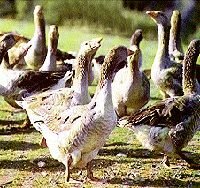
Goose
foie gras is the oldest type. It is generally considered to
have more delicate, silky taste. Others consider it
rather bland compared to duck foie gras. Duck foie gras is
more "rustic" with a more characteristic taste which
reflects the local region. Others, however, say that is too
strong and not as refined as goose.
|

or
Duck?
|
|
The
only way to find out which one you prefer is to taste them
both, preferably side by side.
|
|
What
exactly is foie gras?
100%
goose or duck foie gras is made from liver, a lobe (one side
of the liver) or a piece of a lobe. The only ingredients
that may be added are salt, pepper, and a "noble" alcohol
(cognac, armagnac, etc.). No other products can be added and
no other processes can be used.
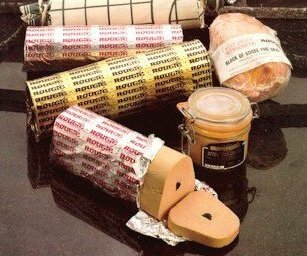
Block
of foie gras with or without pieces is made from a foie gras
or pieces that are puréed and emulsified with water
(10% maximum), resembling mayonnaise. Added to the
purée is 50% whole goose foie gras pieces and 30%
duck foie gras pieces.
|
|
Parfait
de Foie gras is made of at least 75% foie gras. The rest is
usually chicken liver.
Médaillons, pâtés, mousse or galantine
made from or with foie gras contain at least 50% foie
gras.
The
term "foie gras truffé" means that it contains at
least 3% truffle. If there is less than 3% truffle, the
percentage must be indicated on the label. It is never less
than 1% in any case.
|
|
How
to best appreciate foie gras
|
Three
"noble" products, bread, wine and foie gras are usually
appreciated together. While personal preferences are
important it is best to bear in mind some general "rules"
when eating foie gras.
What
type of bread?
Avoid
rolls. Use either whole wheat bread or white sandwich bread.
The latter is best lightly toasted. Do not spread foie gras
on your bread, especially whole foie gras. You can however,
lay a slice of foie gras on a piece of bread and eat them
together.
|
|
Which
wine?
Sweet
white wine is traditionally served with foie gras from the
Landes region. Although Sauternes, the sweet Bordeaux wine
are considered the best,you can also serve Jurançon,
Monbazillac or Bergerac. Foie gras from Alsace is often
accompanied by Gewurztraminer (preferably a Late
Harvest).
|
|
Serving
Place
your packaged foie gras in the refrigerator several hours
before serving. Slice just before serving using a
non-serrated knife that has been dipped in very hot water.
Serve between 50 and 70 grammes per person.
|
|
For more information checkout
Le
Guide du Foie Gras